
Clay County Most Wanted List
Start with the Clay County Sheriff’s Office wanted page, the agency's own hub for these notices. Each profile carries a photo. You also get physical descriptors, the stated charge or failure-to-appear basis, and last-known-location details. That office controls the page and updates it as situations change. So the images stay there rather than being copied here. Leaving photos in place keeps the caution text and context attached to every picture. One caution about the title: "CCSO Top 10 Wanted" is a label, not a headcount. The page may hold fewer filled profiles than the name suggests. Blank slots wait for new entries. There is no posted count or refresh schedule, so check the live page rather than trusting a memory of it. Someone missing from the list can still have an active warrant. And after a reported capture, the Clay County booking and roster channels will show whether the person is now held at the county detention center.
Clay County Wanted Listing Fields
Each card blends identity clues with the stated reason for the notice. Read the whole thing before drawing conclusions. A photo or a shared name rarely settles anything on its own. A last-known address tells you where someone was, not where they are now. And the wording on the card may differ from what a court docket shows later.
| Field | What it shows |
|---|---|
| Photograph | An agency-posted identification image for the wanted notice, not proof of the alleged conduct. |
| Name | The name used by the sheriff for the profile. Confirm identity with other descriptors. |
| Physical description | Available traits that can help distinguish people with similar names. |
| Charge or FTA text | The stated reason for the notice. FTA means failure to appear in court. |
| Last-known location | An older location lead supplied with the notice, not a current residence guarantee. |
Some plain definitions help. A warrant is a court order authorizing an arrest, while a failure-to-appear notation generally means the court says a required hearing was missed. Neither field tells you how the case ends. To follow filed counts, later amendments, and the final outcome, the Clay County Circuit Clerk docket is the record to check.
Use Clay County Wanted Notices
Treat the wanted page as a current agency publication rather than a people-search engine or a complete warrant index. The safest approach keeps three things separate: what you observe, what you report, and what officials verify.
- Open the sheriff’s official wanted page and note which profile fields are actually populated.
- Compare the name, photo, physical descriptors, and stated last-known area without making a public identity claim.
- Do not follow, confront, contact, or try to detain the person. Move to a safe place if needed.
- Send non-emergency information through the official anonymous form or call sheriff dispatch. Call 911 for an immediate emergency.
- Recheck custody and court status through the jail and clerk because a website profile may change after a tip, surrender, or court action.
Start with the sheriff's own page. It shows the photo and the exact charge tied to it. Cropped images travel badly online. They lose context fast, and an old notice can keep circulating long after its status changes. So verify before you share anything. Calling in a tip? Stick to what you saw, when, and where. Avoid posting guesses about guilt or broadcasting where the person might be.
Note: No refresh schedule is published, so confirm current status with the agency or issuing court before acting on any listing.
Clay County Wanted Tips
For tips, the official anonymous tip form takes reports of suspicious activity. A name is optional. The agency warns the form is not built for emergencies or same-day officer response. For non-emergencies, Clay County Sheriff's Office dispatch is the direct fallback. It is described as available around the clock.
Clay County Sheriff’s Office41771 Highway 77, Suite 2
Ashland, AL 36251
Dispatch and anonymous tips: 256-354-2176
Emergency: 911
No Clay County Crime Stoppers partnership or cash reward checks out. Don't expect payment or tack a reward claim onto a shared notice. The agency form and dispatch line handle a factual tip just fine. If there's immediate danger, call 911 and follow the dispatcher's lead.
Never approach someone shown on a wanted notice. No surveillance, no restraint, no attempted arrest. Report what you know and let law enforcement handle the rest.
Clay County Warrant Check
A wanted list and a warrant check answer different questions. The first is a small, hand-picked set of public notices. Clay County offers no self-service sheriff warrant portal. Instead, the Clay County Circuit Clerk office directory expressly assigns warrant information to its criminal-record duties. The main clerk number is 256-354-7926. The detailed directory identifies the criminal and warrant channel. A warrant can be active with no wanted profile attached. Status can shift after service, recall, bond action, or a new court order. Confirmation should come from the issuing court or agency. Sheriff dispatch at 256-354-2176 can route law-enforcement questions, but the court record remains the key source for court-issued status.
- Gather the full legal name and any known case number. Add the approximate court or incident date when available.
- Call the Clay County Circuit Clerk and follow the criminal or warrant-information option. Ask how current status may be confirmed.
- Use the clerk’s public-access computer or Alacourt Just One Look to inspect the related case record when one is available.
- If the warrant may concern the caller, speak with a lawyer and arrange resolution through the issuing court or agency. Do not make an unplanned approach to an arrest location.
- Confirm the result again before relying on it because the wanted page and docket can update at different times.
Statewide case searches run through the fee-based interface linked below, though the clerk offers an in-office public-access computer as a free local alternative. Open the Alacourt Just One Look search to review its current access terms and available case fields.
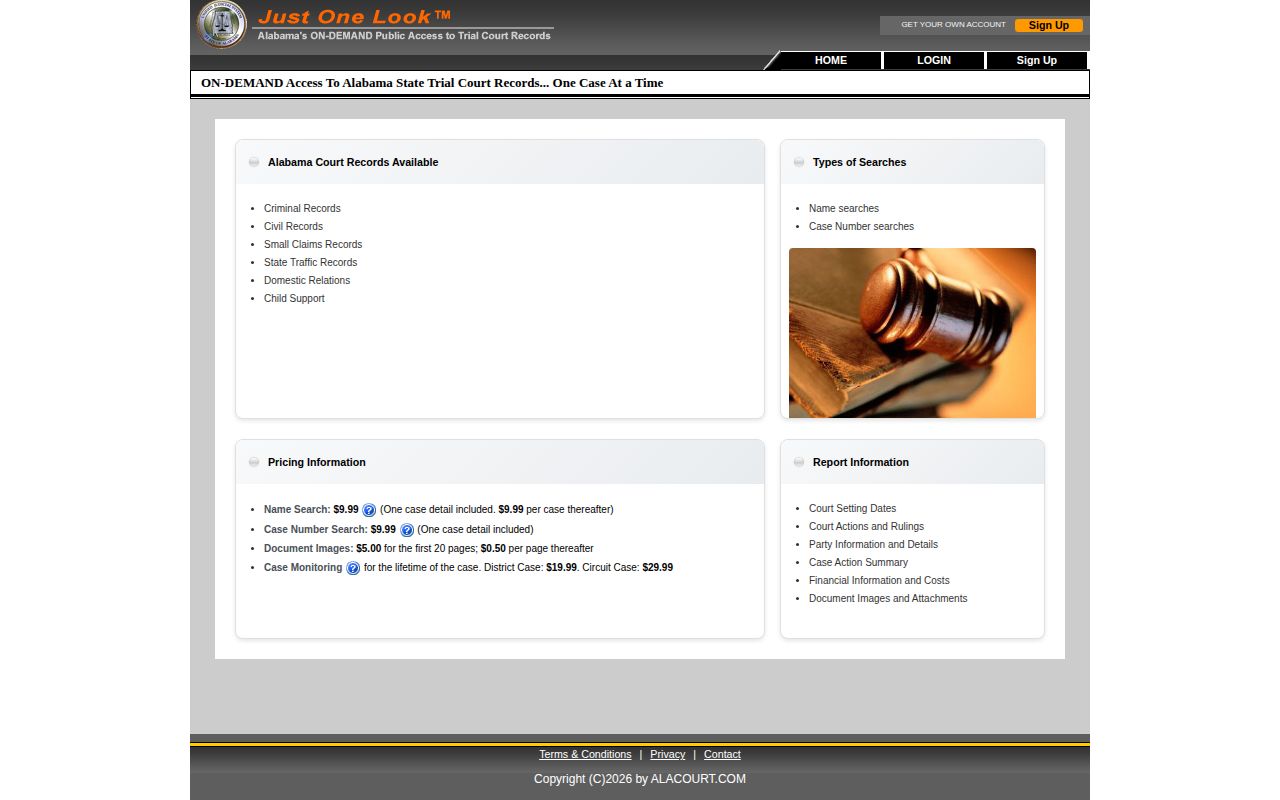
Even with the interface in hand, a search result still needs matching to Clay County, the right person, and the current docket before it means much.
Clay County Warrant Types
A warrant's label tells you where to look, not the whole story. The issuing office and the court docket hold the real answers, and those documents always control over any broad description you see here.
| Type | General meaning | Safe official path |
|---|---|---|
| Arrest warrant | A judicial order tied to an alleged offense. | Confirm with the issuing court or law-enforcement agency, then use counsel to arrange resolution. |
| Bench warrant | An order commonly issued after a missed court duty or failure to appear. | Ask the clerk about the docket and current court instructions. |
| Failure-to-appear notice | Text indicating that the court says a required appearance was missed. | Verify the setting and order with criminal or warrant staff. |
| Federal warrant or fugitive notice | A federal matter outside the county list’s complete scope. | Use the issuing federal agency or U.S. Marshals notice and an attorney. |
Federal tools have limits worth knowing. The Marshals Service posts selected fugitive notices, yet it offers no complete Clay County warrant list. The Bureau of Prisons locator covers a later custody stage. It also shows no inmate photographs. For a local warrant, the Clay County clerk remains the place to ask.
Resolve Clay County Warrants Safely
Worried a Clay County warrant has your name on it? Don't lean on a name search, an old wanted card, or hearsay. Get a lawyer, find the issuing court, and ask that court directly how to confirm and resolve the status. The Clay County Circuit Clerk keeps records for District and Circuit Court proceedings in the 40th Judicial Circuit. Visit the office at 25 Court Square in Ashland, or write to P.O. Box 816, Ashland, AL 36251. Posted weekday hours run 8:00 a.m. to 4:00 p.m., though they can change.
Clerk staff can explain record access and point you to an existing docket. They cannot give legal advice. Your attorney can review the warrant, walk through court procedure, and arrange an appearance or surrender with the proper agency. Planning it this way cuts the guesswork. It also spares you the risky move of showing up at the wrong place or testing your warrant status through a chance run-in with police.
An initial appearance after an arrest or surrender typically covers rights, counsel, release terms, and future dates. A bond is simply a court-set condition for release while a case is pending. The jail roster may list intake text or a broad charge description, but the docket becomes the record that keeps going. Filed counts change, and a warrant can be recalled or served. The current docket and the issuing office are the only places that explain that status.
Names can trick you, so check carefully. Match the full name against the county, case number, and dates that matter. People share names all the time, and the wanted page is not a general search of every court order. If a record turns out wrong or belongs to someone else, save the source and ask the clerk or issuing agency about correcting it. Never confront anyone named in it.
Note: Resolve things safely through counsel and the issuing court or agency, never by hiding, dodging service, or hunting for tips on avoiding arrest.
Clay County Wanted Alerts
Looking for alerts? No Clay County, Alabama sheriff mobile app appears in the agency's own navigation. App stores carry similar names, some pointing to Clay Counties in other states. The local channels you can count on are the secure inmate roster, the sheriff's Facebook and X accounts, and the Nixle alert signup for text, web, and email notices.
These outlets work well for urgent or episodic posts, but none serves as a full wanted or warrant archive. Social media items come down or get corrected. Nixle sends public-safety alerts, and it does not prove that a named person has an active warrant. Begin with the sheriff's wanted page for a curated notice, then check with the Circuit Clerk on a specific warrant.